
The Morning You Notice It
You hit the button and the opener motor runs, but the door doesn't move. Or it lifts an inch, there's a crack and a pop, and then it comes free all at once. Or maybe it's been weeks of the door feeling a little heavier, a little slower, a little more hesitant than it used to be — and this morning, with frost still on the windshield, it finally just stopped. Any of these is a sign that cold weather has exposed something in the door system that was already working harder than it should.
The Symptoms Worth Paying Attention To
- Dead stop, motor still running: the opener hums or strains but the door doesn't lift at all.
- A loud crack or pop before movement: usually an ice seal breaking at the bottom of the door.
- Slow, jerky, or uneven travel: the door moves but hesitates, especially partway up.
- Opener reverses immediately: the door barely starts before the opener sends it back down.
- Visible ice or frost along the bottom weatherstripping or in the tracks themselves.
None of these mean the same thing, which is exactly why a technician works through them in order rather than guessing.
What Gets Checked First: The Ice Seal
The most common culprit in an Orland Hills winter is also the simplest: the rubber weatherstripping along the bottom of the door has frozen to a thin sheet of ice on the concrete apron. This happens after melting snow refreezes overnight, or when salt-laden slush drips off a car and freezes under the door. The fix is never to force it with the opener — that strains the springs and can tear the weatherstripping. Instead, the ice bond gets broken manually, with warm (not boiling) water, a hair dryer, or a plastic scraper, then the area is dried and a door-safe de-icer or silicone spray is applied to the seal so it doesn't weld itself down again.
Next: Lubrication That's Thickened or Gone
Old grease and general-purpose oils stiffen in cold temperatures, and once lubricant gels on the rollers, hinges, and torsion shaft, every moving part fights a little more friction. This shows up as sluggish, uneven travel rather than a dead stop. The fix is straightforward: clean off the old buildup and apply a lithium-based or silicone garage door lubricant rated for cold weather to the rollers, hinges, and springs — not a household oil, which attracts dust and gums up again quickly.
Then: Roller and Track Condition
Worn nylon rollers or anything with cracked bearings will bind more noticeably once cold makes everything else stiffer. A technician checks for rollers that wobble, tracks that have shifted slightly as the house settles seasonally, or debris and old grease built up in the track channel. Replacing worn rollers is a relatively small job, but it matters — a roller that's already marginal in September can seize completely once temperatures drop.
After That: Spring Tension
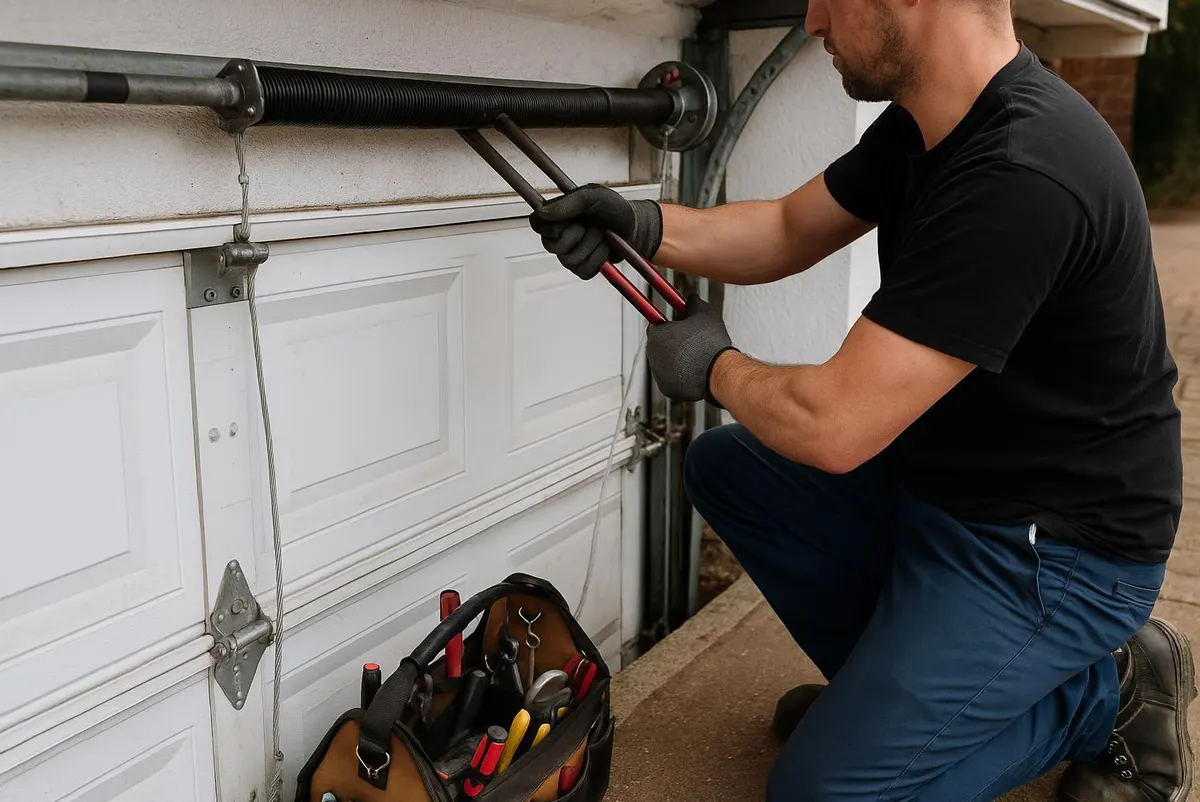
Torsion and extension springs don't change dramatically with temperature, but cold metal is more brittle, and a spring that was already near the end of its lifespan is more likely to fail on a frigid morning than a mild one. If the door feels unusually heavy when lifted manually, or the opener strains even after lubrication, a technician will check spring tension and look for visible wear, gaps in the coils, or rust. If a spring is compromised, replacement is the only real fix — this isn't something to patch or stretch out, especially with a heavier two-car door common in this area.
Last Check: Opener Settings and Sensors
If everything mechanical checks out but the door still reverses or stalls, the opener's force and limit settings may need adjusting, since a door that moves slightly differently in winter can trip safety reversal thresholds that were set for warmer months. Frost or condensation on the photo-eye sensors near the bottom of the tracks can also cause false reversals and is worth wiping clean before assuming it's a bigger problem.
When to Call Orland Hills Garage Door
If your door is frozen to the slab, call before you force anything — our Emergency Garage Door Service handles exactly this kind of situation safely, without damaging the weatherstripping or straining the opener. If the door is simply sluggish, groaning, or feels heavier than it should, that's worth a Garage Door Maintenance visit now, before a marginal spring or worn roller turns into a no-notice failure on the coldest morning of the year. We lubricate, inspect springs and rollers, and adjust opener settings so the door is ready for whatever winter brings.
If your garage door in Orland Hills, IL is sticking, stalling, or freezing shut as the temperature drops, give Orland Hills Garage Door a call — we'll get it diagnosed and running smoothly before the next cold snap.