
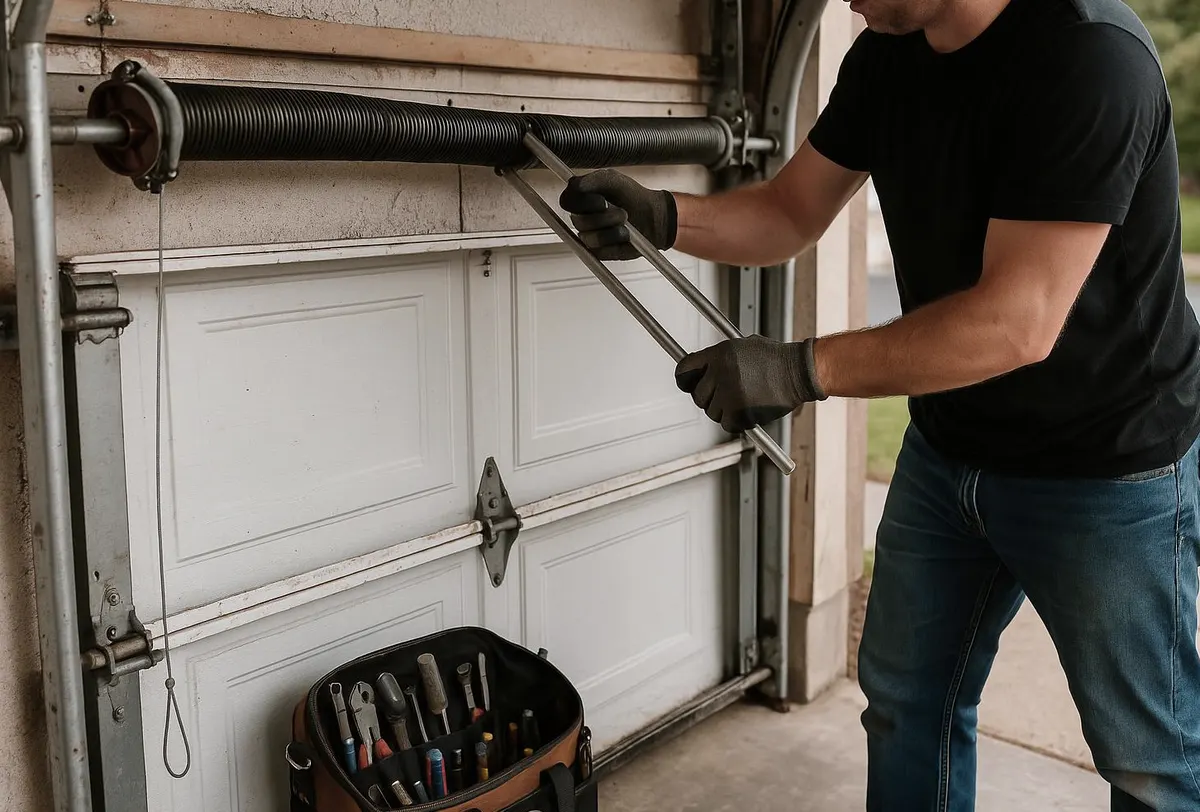
You hit the button on the wall and the opener groans a little longer than it used to. Or maybe you notice the door hanging slightly crooked when it's halfway open, one side a beat ahead of the other. Maybe it's just a faint new sound, a strain in the motor that wasn't there last spring. Most homeowners catch an unbalanced garage door this way: not through a warning light, but through a feeling that something is working harder than it should be.
That feeling is worth listening to. A garage door that isn't balanced doesn't just look or sound off — it forces the opener to do a job it was never designed to do, which shortens its life fast. Here's how to check your door's balance yourself, what it tells you, and where the line sits between a homeowner fix and a technician's job.
What "Balance" Actually Means
A properly balanced garage door is counterweighted by its springs so that it takes very little force to lift by hand and it stays put wherever you leave it, open or closed. The opener's motor is meant to provide a light assist, not to do the heavy lifting. When springs lose tension, stretch unevenly, or weaken with age, the door's weight shifts onto the opener's gears and motor instead of the springs carrying it. That's when you start hearing the extra strain.
Tools You'll Need
- A sturdy step ladder
- Work gloves
- A flashlight
- A pencil or piece of tape to mark a reference point on the track
That's it for the homeowner-safe part of this. No wrenches near the springs, no winding bars, nothing that touches tension.
Step-by-Step: Testing the Balance
- Close the door fully. Start from a closed position so you have a clean baseline.
- Disconnect the opener. Pull the emergency release cord (usually a red handle hanging from the trolley) so the door is no longer connected to the opener arm. This step matters — if the opener is still engaged, you're testing the motor, not the door.
- Lift the door by hand, slowly, to about waist height. Pay attention to how much effort it takes. It should feel relatively light, roughly the weight of a few grocery bags, not like you're fighting it.
- Let go and watch what happens. A balanced door will stay put, or drift down only an inch or two. A door that slams shut, drops suddenly, or shoots upward on its own is out of balance, and that imbalance could be significant.
- Check both sides for evenness. Use your pencil mark on the track as a reference and watch whether one side of the door is noticeably higher or lower than the other as you move it. A visible tilt usually points to uneven spring tension or a cable issue on one side.
- Listen and look along the tracks. With the door partway open, run your flashlight along both tracks. Note any grinding, binding, or spots where the rollers seem to catch rather than glide. This isn't a balance test exactly, but it's part of the same inspection and tells you whether friction is adding to the opener's workload too.
- Reconnect the opener once you're done by pulling the release cord again or following your opener's reconnect instructions, then test a normal open/close cycle.
What an Unbalanced Door Does to the Opener
When the springs aren't doing their share, the opener's motor and gears take on the difference every single cycle. Over weeks and months, that shows up as:
- Longer, louder motor run times, especially noticeable in a quiet garage
- Premature wear on the drive gear, which is often plastic and designed for light-duty assist, not heavy lifting
- The opener's force settings getting pushed higher and higher to compensate, which increases the risk of the safety reversal sensors malfunctioning
- Capacitor and circuit board strain on older openers that weren't built for the extra load
In this part of Illinois, seasonal swings make imbalance worse than it might be elsewhere. As temperatures drop heading into winter, metal springs contract slightly and can tighten or shift tension, which is exactly when a door that was borderline all summer tips over into noticeably unbalanced. Road salt and ice buildup on tracks and rollers through the winter add friction on top of that, so the opener ends up fighting both a tension problem and a resistance problem at the same time. Getting the balance checked before the cold really sets in can save the opener a rough few months.
What a Homeowner Can Safely Do
Everything above — the lift test, the visual check, listening for strain, keeping tracks and rollers clean of road salt residue and debris — is reasonable DIY territory. You can also keep hinges and rollers lightly lubricated with a garage-door-specific lubricant, which reduces friction without touching anything under tension.
What Needs a Technician
Anything involving the springs themselves is not a homeowner job. Garage door springs, especially torsion springs, are wound under extreme tension and have caused serious injuries when handled without the right bars and training. If your balance test showed the door dropping fast, lifting unevenly, or requiring real muscle to move, the springs need professional attention — whether that's re-tensioning or full replacement. The same goes for frayed or uneven cables, bent track sections, or a door that's tilting visibly to one side.
When to Call Orland Hills Garage Door
If your test turned up an uneven lift, a door that won't hold its position, or an opener that's clearly working overtime, it's time to call in a technician rather than keep running the door as-is. Our Spring Replacement service addresses the root cause directly, matching new springs to your door's exact weight so the opener goes back to doing light assist work instead of heavy lifting. If the opener itself has been straining for a while, our Garage Door Opener Service checks the motor, gears, and force settings to make sure nothing was damaged by months of extra load. We also offer Garage Door Maintenance visits that catch balance issues like this before they turn into a mid-winter breakdown.
If your garage door in Orland Hills, IL isn't passing its own balance test, give Orland Hills Garage Door a call before the cold weather makes the problem worse — we'll get it rebalanced and running the way it should.